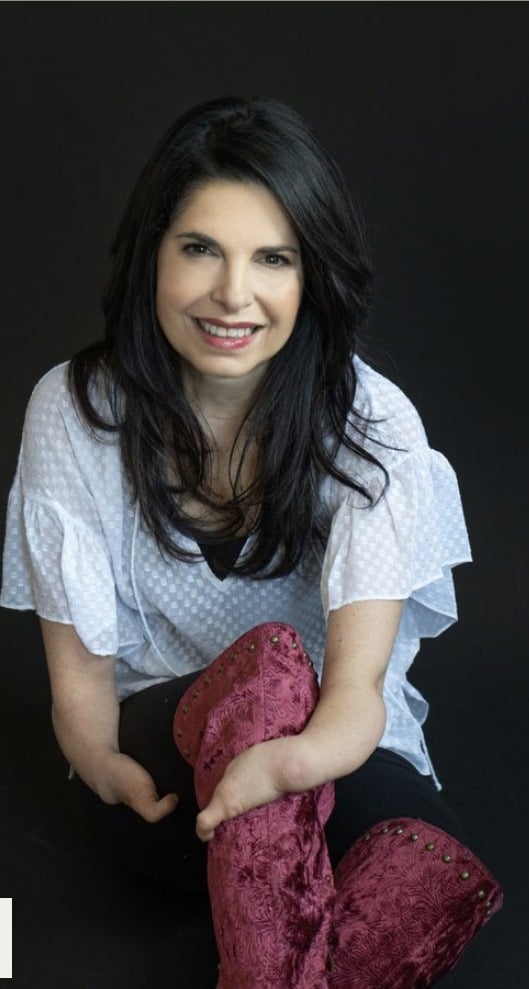
As published on June 18, 2022 on USA Today and later msn, the below opinion article is the original full version that was edited down for format.
The first time I saw my husband John I was visiting his childhood home in New Jersey. His brother Mat, my friend, pointed at a picture of a handsome young man with reddish hair, hazel eyes, and warm smile and said, “That’s my brother, Johnny. He lives in D.C….” As I gazed at the photograph, I couldn’t help suppressing relief he couldn’t stare at me back.
I was born with a condition called ectrodactyly that left me with one finger on each hand, shortened forearms and one toe on each foot. Upon encountering me, many presume I have been condemned to a rather dire life-sentence. However, despite my genetic mishap, I was fortunate to have been raised by parents who treated me simply as if I was in my own version of normal, capable of doing everything within my means. The more they held back the more I became independent and thrived.
In many respects my genes were in my favor since I was also born with an innately positive disposition. With family and friends, I have always been naturally social, easy-going and even sometimes goofy. But regardless, I still abhorred whenever strangers invariably gawked at the sight of me. A typical day included constant side-glances, widened eyes and finger pointing, topped off with an outburst of, “Mommy, did you see that girl…?” As I became more self-aware, I grew increasingly frustrated from all the unwelcome attention. If am really fessing up, even into adulthood, I’d been known to give the evil eye to an innocent, curious child. To compensate, beginning around the age of five I began to hide my one-fingered hands all of the time. The only exceptions were when I was in the comfort zone of family or close friends. My go-to crutches included deep-pocketed jeans, a long-sleeved sweater, or a jacket even on a hot summer day. In photos I even hid my hands behind my back or made sure to position myself so that they were strategically hidden behind the bodies of others. My life was the perfect paradox– I felt normal but was perceived as anything but.
When I hit puberty and began to experience the feelings of a crush, my hiding had entered an advanced phase knowing the stakes had just increased. I’d walk the middle school halls with my tiny hands desperate for the new boy to get to know me first before seeing my shame. In college, the first time I was asked out on a date, I suggested skipping the meal and seeing a movie to avoid the embarrassment. The darkness of the theater was my savior. It is undeniable that hiding my limbs was a form of self-loathing. As I was effectively lying to the world about my true identity, I simultaneously cruelly was rejecting myself.
After graduating, I became a practicing attorney on Wall Street, my career a safe haven where my limb difference was thankfully inconsequential. But unlike my professional world, when it came to dating, I noticed I was not on a level playing field as compared with my friends. When we’d venture out together on weekends, I was the only one always put in the friend zone. If I met someone and he expressed interest, I’d leave the bar miserable assuming that he hadn’t noticed.
A couple of years after first seeing John’s picture, we finally met on Yom Kippur in Synagogue. He had moved to Manhattan and our mutual friend Beth had decided to set us up at services. John jokes now that while we were all atoning for our sins during the solemn holiday, he met me and started dreaming up new ones. That morning before we met, I nervously asked Beth if she’d mentioned my physical abnormalities to John. “Why would I do that?” She practically laughed aloud. “I don’t ever think about it and once he gets to know you, neither will he.” But despite the personal introduction about to ensue, my anxieties soared. If John didn’t know about my condition already, I knew my chances were slim. That evening in Temple when we were first introduced and throughout the service, I wore a smile but reflexively shoved my one-fingered hands deep into the pockets of my long purple jacket. It occurred to me, as I listened to the congregation chanting the traditional prayers of repentance and turning a new page, that when you’re different the world doesn’t force you to hate yourself—it’s a choice.
The next day, John and I met again in his aunt’s house for “break the fast” and cloistered in the corner of her kitchen to talk over bagels and lox. The conversation flowed so effortlessly that by the end of the night, I’d forgotten to keep my hands hidden. The more he didn’t seem to care the more comfortable I became. Most importantly, John had the opportunity to get to know me and move past the superficial. Thankfully, I not only married a man willing to embrace me unconditionally but who also became the father of our three children, including two sons, Ethan and Charlie, who inherited my condition. Since the day they were born John championed our collective circumstance. Finding such a keeper is fortunate for anyone, but when you live your life so blatantly different, it’s like finding a needle in a haystack.
As a result of the pandemic and even now working in a hybrid environment, I’ve mainly been on virtual conference calls where only my face and shoulders are visible. No one can see my one-fingered hands unless I affirmatively wave them before the camera. My physical self is effectively concealed. It is no wonder memories of living as a hider have resurfaced. It has also caused me to think about our sons, now in their late teens. Channeling my own parent’s roadmap to empowering me, both Ethan and Charlie have grown up believing the sky’s the limit in their abilities. And to my delight, neither are hiders.
But as our sons turn to their next chapter and explore dating, I suspect they will long for the option of ‘Get-to-know-me first and get-to know-about- “it” second. How wonderful would it be if the world were generously populated with self-identified demi-sexuals, those who are attracted to a person’s personality before their body? But we deal with the world we’re given, not the one we wish for. Nowadays, most people meet online and judge one another at first sight for the potential of a quick swipe right. The show Ted Lasso on Apple TV+ addresses this dilemma with a fictional dating app called “Bantr” where the users give each other a chance based solely on a written profile and personal messaging. Yet even if Bantr was real, people that are different would still struggle about how much to disclose.
The irony doesn’t escape me that many people post unrealistic photos of themselves of a time when they were younger, thinner or both and get to play ball when people like us never even get a chance to walk onto the field. And worse, the experience of constant rejection is also fraught with emotional risk and can erode your self-worth. You’re damned if you reveal yourself in the first instance and damned if you don’t and they discover it later on a first date. We feel utterly powerless. And often times we are searching for someone but all the while simultaneously needing reaffirmation we are even worthy.
One day recently I asked John an unfair question. “If we had met during the age of Internet dating and you noticed my disfigured limbs in my photo or learned about it as part of my profile, would you have given me a chance?” His answer was simultaneously expected but still rough to hear. “I guess not….but I had heard about you from Beth so I understood you were worth getting to know.” I know that not every person has the maturity, strength or spirit to choose a life tethered to another whose appearance invites constant unwelcome attention. The pool of people willing to take the leap of faith is a smaller subset of the population.
Everyone deserves the possibility of love. And for people like us, finding the right match becomes an inherently more difficult experience, online or not. It’s the equivalent of living your life as a potentially winning lottery ticket but cloaked in an envelope that is always overlooked. But here’s the upside: when you look physically different, the best-kept secret is that it’s truly a gift. I wasted so many years hiding my hands, not appreciating that those people willing to take the plunge would be the only ones worthy of my time and affection anyway. I’ve come to the conclusion that my needle in the haystack theory is upside down. Flaunting your difference (my code for unconditional self-acceptance) becomes the most important barometer so that special people can show up.
It took more than two decades before I truly let go of fear and braced myself to be fully seen. While there are no guarantees, I believe it was the key to the possibility of a rich, more fulfilling love. On a recent wedding anniversary John and I both coincidentally bought each other the very same card. The message, apropos: “20 years of sheer bliss. You’re welcome.”
Meg Zucker is a Managing Director at RBC Capital Markets and President and Founder of Don’t Hide It, Flaunt It (www.d1f25a37b7.nxcli.io), a 501(c)(3) non-profit whose mission is to encourage empathy and celebrate difference. Meg’s book, Born Extraordinary: Empowering Children with Differences and Disabilities will be published by Tarcher Perigee, an imprint of Penguin Random House, in March 2023.