


We all start out so unabashedly unashamed. Whatever makes us different we regard without concern of how others might be making assumptions about us.
Then it all changes. Someone. Somehow. Sometime. Something. We find ourselves thrust into the world of judgment, or painfully watch as our children face the same. Consumed by the unwelcome attention, we might struggle, sometimes for years.
As we turn the page to 2022, we once again choose to highlight those auspicious people that have demonstrated this past year that they have learned not to hide, but rather to flaunt whatever makes each of them unique and fabulous.
These phenomenal individuals understand the importance of unconditional self-acceptance and inspire others to follow their lead.
Lila Moss Hack
Lila Moss may be following in supermodel mom Kate’s footsteps, but she’s also making a name for herself in the fashion industry. The 19-year-old joined her monther Kate on the catwalk during the much-hyped Fendi x Versace “Fendace”fashion show in Milan and has continued to flaunt– proudly showing off the insulin pump on her thigh due to her having type 1 diabetes on the runway. Her actions continue to encourage young fans to follow her lead, posting on her Instagram handle their support and appreciation. “Absolutely love that you don’t hide your pod, you’re an inspiration to so many living with T1 diabetes.”
George Robinson
Born in Nottingham, Robinson (now 24) went on a school rugby tour to South Africa. It was the suffered a severe spinal neck injury attempting a tackle while playing in Cape Town. As a result of the accident, Robinson is a tetraplegic and uses a wheelchair. However, the setback never stopped him from achieving success. Cast as a series regular in the acclaimed series, Sex Education on Netflix, his character Isaac’s disability was written around the actor’s real life one. Robinson made sure to be included in the creative process and in 2021 Robinson spoke at the Edinburgh TV festival on a panel focused on disability representation. As he brilliantly put it this past fall, “I hope that through Isaac, people see how to treat someone with a disability as if they were treating anyone else, regardless of it.”
Naomi Osaka
Tennis champion Naomi Osaka pulled herself out of the French this year to prioritize her mental wellbeing. Writing for Time Magazine, Naomi’s piece, “It’s OK Not to Be OK”(and it’s ok to talk about it!) provided the runway for countless of other world class athletes to place their mental health above everything. According to Osaka, “You can never please everyone.” We applaud Naomi for shining a light on her own invisible difference and encouraging others to do the same
Matt Stutsman
Born without arms and famously known as the “Armless Archer,”Stutsman currently holds the Guinness Book of World Records title for the farthest archery target hit for any archer. In 2021, he became one of the top Paralympic compound archers in the world, and he proved it at the U.S. Paralympic Team Trials in Chula Vista, California. Stutzman smashed the previous world record when he shot a 1398/1440 in a double, 50-meter round, crushing the previous world mark by more than 20 points. During the summer Stutsman then competed as part of the U.S. team in the Tokyo Paralympic games. According to Stutsman: “I decided that since my arms weren’t going to grow back, I was just going to go forward with everything and not let anything get in my way or stop me from my goals.”
Ariel Henley
Thirty-year-old author of “A Face for Picasso,”Ariel Henley wrote vividly in Salon about having Crouzon Syndrome, a craniofacial condition where the bones in her head don’t grow. Henley’s determination that people understand what it feels like to live in her shoes is enlightening and worthy of all of our attention: “I struggled with whether or not I wanted more plastic surgery, because even as a child, I understood that conforming meant I wouldn’t be treated so cruelly by the world around me. I underwent over sixty surgical procedures before I graduated from high school. Not because I hated my face. But because the world did. And it still wasn’t enough.“
According to Henley who believes from her life experience that unconscious bias goes beyond workplace exclusion and negatively impacts livelihood: “In the Western World, beauty is perceived through a narrow set of ideals: white, thin, able-bodied, and symmetrical. Thus, having a facial disfigurement meant having my humanity constantly called into question, which drilled into me a lesson I’ve spent my entire life learning: Pretty people are valued more.”
James Robinson
This year James Robinson, a self-taught video creator who has published a short film spotlighting his own unique difference, was featured by a featured article in The New York Times. James has strabismus, a visual disability that makes it difficult to coordinate and focus his eyes. In the film, titled “Whale Eyes,”James explains how his eyes function and shares different coping mechanisms he has invented to help him navigate a world built for “normal eyes.”He emphasizes how his eyes shape social encounters and the conversations, or lack thereof, he has regarding his difference. We cannot fully understand and embrace one another if we meet each other’s differences with discomfort and awkwardness. According to James: “I don’t have a problem with the way that I see. My only problem is with the way that I’m seen.”
Amy Bockerstette
Also known as “Amazing Amy,”in 2021 Bockerstette became the first person with Down Syndrome to take part in a national college championship when she teed up at the National Junior College Athletic Association’s championship in Florida. Now a spokesperson for Special Olympics and high-profile keynote speaker to promote inclusivity, Amy informs everyone that to fulfill your goals, just remind yourself, “I got this“and all will fall in place.
Brayden Harrington
It does not matter what political party you belong to join us in praising Brayden Harrington who was 13 years old when he received national attention after delivering a speech at the Democratic National Convention. In his memorable speech, Harrington spoke on overcoming his challenges with stuttering. Afterwards, Harrington remained committed to helping other kids who stutter and recently published children’s book, “Brayden Speaks Up: How One Boy Inspired the Nation”(HarperCollins). In it Braydon recounts the true story behind his convention speech, celebrating the bravery in speaking up and making our voices heard.
Ali Stroker
We applaud Ali Stroker for her continuous efforts to increase representation for disabled actors in theater and film. As a Tony award winning actress, author and advocate, Ali has fully embraced her unique self and encourages others to do the same. And most recently you can watch Ali’s killer performance in “And Just Like That,”the newest chapter in the Sex & The City Series HBO series. According to Ali, “In so many ways, I feel like my disability is a gift because I’ve had to wrap my arms around what I can do and who I am.“
Ryan Reynolds
This year acclaimed Canadian actor Ryan Reynolds opened up about his mental health and the impact of having anxiety has had on his life. Speaking openly and also posting about having anxiety on Instagram, Reynolds shared that it all started when he was a child and something that has remained with him his entire life: “I see anxiety as an engine for creativity but it’s also got its own cloud and shroud of darkness”¦..”Ultimately, Reynolds stated that he was grateful for having anxiety being able to make it into something useful.
Philip Murphy Wiggins
Originally from Baltimore but now a Seattle native, sight-impaired street musician Philip Murphy (known as just “Murphy”or “Blind Boy Music”) who lost both parents at a young age competed as a fan favorite this year in season 19 of American Idol. Murphy maintained a calming presence throughout his time in the competition. And despite knowing he is expected to fully lose his sight in his mid-thirties, Murphy keeps everything focused on his craft and being positive: “Inspiration will find you like wind in autumn. You owe no one your best day. Be human with your expectations of yourself.”
Abbas Karimi
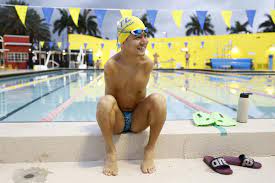
Abbas Karimi was born without arms in the capital of Afghanistan, Kabul and describes his experience early on: “When you are born disabled without arms or legs or missing body parts in Afghanistan, you are considered hopeless.” Bullied throughout his childhood, his parents tried to protect Karimi by keeping him inside the house with a focus on school. But Karimi just wanted to go out and play like all the other kids. When he was twelve, Karimi started his first sport “ kickboxing. He took it up so he could defend himself. Then the following year he learned to swim and the water became an oasis. Although at first, he doubted he could master the sport without having arms, he realized he could excel by making the most of his feet. In his first competition, Karimi became an Afghan national champion and then finally fled the country through Iran and then Turkey where he won two national championships. Then finally, Mike Ives, a retired teacher and former wrestling coach in the United States saw a video of Karimi posted on Facebook. Ives sent Karimi a long message encouraging him to come to Portland in the USA and telling him he would support him. In 2021, Karimi’s “dream came true”as a competitor in the Paralympic games in Tokyo. According to Karimi: “No one is the same in this world and everyone is different. But we all have to accept [ourselves] and accept each other the way we are.”
Meg’s Blog