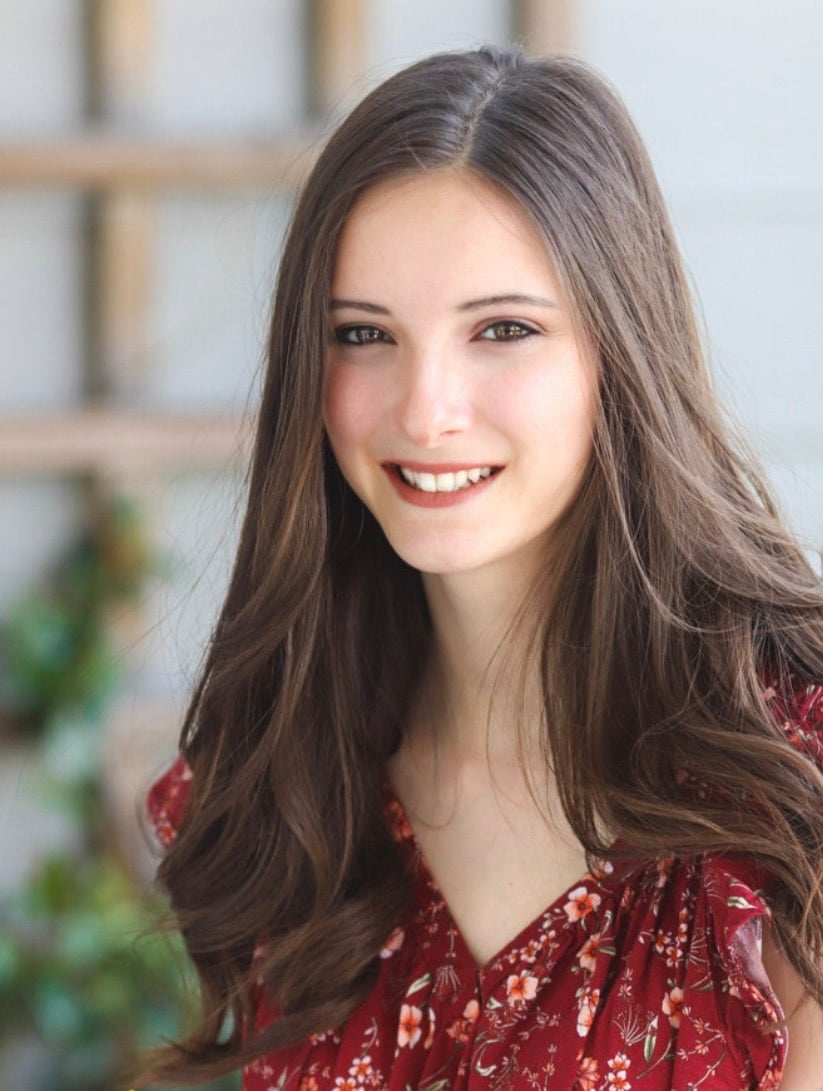
2025 SCHOLASTIC ART & WRITING FLAUNT IT AWARD FINALIST. The sensation of wearing socks makes me crazy. Sunlight is like someone moving a laser across my eyeballs. A light perfume makes me feel sick. Chapel services are deafening. Decisions are either agonized over until tears spill and no decision is made at all, or made so quickly and resolutely I get whiplash.
I have a routine that can’t—won’t—be altered. I brush the ends of my hair in eight strokes. I make clicking sounds with my tongue against my teeth and count to four, exactly four times. Every odd number, save seven, fills me with inexplicable dread. I wash my hands excessively, scrubbing halfway up my arms, as if I am going into surgery instead of going about my day. I use four paper towels to dry my hands. Something terrible will happen if I do not do these things.
Emotions are physically tangible states of being. Happy is to be on top of the world, with adrenaline pulsing through my veins. Angry is like wasps buzzing around in my ribcage and an implosion in my brain. Fear grips my lungs with icy claws and steals my breath. Sad hurts like a poison in my heart and makes my limbs numb. Overwhelming is literally inhibiting.
The world is loud and bright and so very, very painful, and it is too much.
People are baffling. They expect things, but don’t tell me; they have emotions that I’m supposed to understand but really don’t, and their normalities and societal demands are impossible to conform to. Social interactions are fraught with the fear of doing something wrong—something bad. Of being embarrassed. Of being judged. Of being rejected. Deep conversations take thought, planning, and effort that waft away like smoke on a breeze when I say the wrong thing anyway.
“Wrong” generally feels like how people see me. I am told I am too sensitive. Too dramatic. I speak too quickly, or too loudly, or too chaotically. I am too cynical. I read too much into everything. I ask too many questions. I interrupt. I am selfish. I am obsessive. I am too much. Friendships that dissolve like ashes in water rest on my shoulders.
When I look at myself, I am seeing through a broken mirror. A splintered reflection, with fissures that spread the more pressure is applied. I’m told no one feels whole—that we live in a broken world. If none of us are whole, why is it that my pieces don’t fit anywhere?
I’m neurodivergent. Doctors conclude I have an array of disorders, from being on the autism spectrum, to OCD, ADHD, ADD, sensory processing disorder, and general anxiety disorder. Sometimes, it’s nice to have a list of all the ways I’m not normal. I have the privilege of saying, “I have to aggressively scroll up and down on my phone screen sixteen times every morning because of my OCD.” Or, “I want to comfort you because I care about you, but I am ultimately inept at doing so because of my autism.” A list can be useful—a disclaimer to being friends with the social outcast.
A list doesn’t fix me.
My parents have tried to fix me for eighteen years. They’ve sent me to therapists, and then yelled at me for wasting their money when I didn’t make enough progress. They’ve told me to act better; do better; be better, even though that’s what I spend every day struggling for. And I’ve tried to fix myself, hating the things I do but cannot control, hating who I am. Incessantly ashamed of everything that is wrong with me. Ashamed of my fractured reflection.
It’s hard enough finding your own identity. It’s harder when everyone else wants you to change. I’ve had my faults spelled out for me my entire life. By my peers. By my friends. By my family. My father frequently yells at me, telling me my brain doesn’t work right, or that I’m crazy—even occasionally threatening to send me to a psychiatric ward. My former best friend told me I was a psychopath for two years. Sometimes, when I think about myself, all I hear are the degrading words spoken by the people who were supposed to love me for who I am.
It wasn’t until recently that I began to wonder if my defects truly make me a bad person. If I really am broken, as I was told I am. If I do, in fact, deserve the self-deprecation. The friends I’ve finally made tell me I don’t. They tell me I’m loved. They tell me not to let the bad define me. And as I have begun to feel like an individual with problems, instead of an individual problem, I’ve started to wonder if maybe… maybe what’s broken doesn’t always need to be fixed.
Shattered glass will still refract light. Maybe the scattered pieces of myself can still be beautiful, if not whole.
That doesn’t change who I am. I’m still a girl with disorders. I am still socially unaware. I still have tics. I still talk too much. I still feel like an irritation to those around me fifty percent of the time. But I’m learning—slowly, very slowly—that who I am is okay.
Maybe it’s okay that I’m sensitive. I feel for others. I would do anything for the people I love, because I care completely and deeply. Maybe it’s okay that I’m dramatic. I am passionate about life, and I enjoy expressing myself. Maybe it’s okay that I talk too quickly. I have so many thoughts and ideas bouncing around inside of my head, that I want to share them in order to inspire and bring joy to others.
I’m beginning to understand that there is good in who I am. I’m starting to see that there can be other things, attributes beyond my faults, that make me me. I am loyal. I am thoughtful. I am inquisitive. I am creative. I am driven. Most importantly, I am learning.
And maybe all of it—the bad, the good, the failures, the triumphs—maybe it’s all okay.